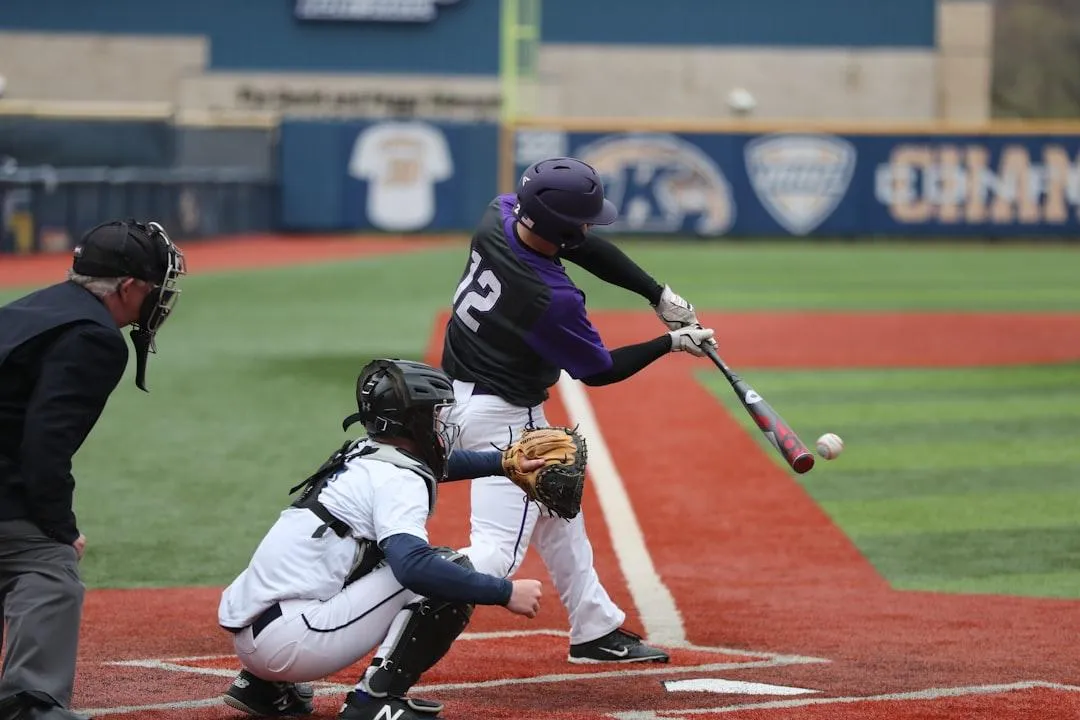
Flow State Isn't A Hack: What Athletes Need To Know To Access Flow
Alex Bolowich is a Certified Mental Performance Consultant, founder of Elite Mental Performance, and Co-Founder of Ibex Tactics. Alex is based out of Charlotte, North Carolina, where he specializes in working with athletes and teams to help them perform in the most intense situations, building practices for sustained excellence at elite levels like the NCAA, NFL, MLS, NBA, and Olympics. If you are interested in any of his signature programs, use the link here! Enjoy the article below!
"The Zone": How Elite Athletes Can Increase Their Flow States
What flow actually is, what it does to your brain and body, and why calling it "the zone" is doing you a disservice.
Every athlete has had that game. The one where the hoop looked like a hula hoop. Where time slowed down just enough. Where the right decision arrived before you even had time to think about it. You didn't force it. You didn't try harder. You just...performed.
Most athletes call that "the zone" and leave it there, some mysterious, magical state that shows up when it wants and disappears without warning. That framing is convenient. It's also completely useless.
What you experienced has a name, a mechanism, and, here's the part that should matter to you, a repeatable on-ramp. It's called flow. And researchers have been studying it for decades.
So what is flow, actually?
Psychologist Mihaly Csikszentmihalyi first mapped it in the 1970s. Steven Kotler, co-founder of the Flow Research Collective and arguably the most prominent voice on peak performance today, has spent the last two decades translating the neuroscience into something coaches and athletes can actually use.
Kotler defines flow as an optimal state of consciousness, one where you feel your best and perform your best. Time distorts. Self-consciousness drops out entirely. Intuition spikes. You stop thinking about the game and start being in it.
A 2022 peer-reviewed study Kotler co-authored formally defines it as"a cognitive state that manifests when there is complete attentional absorption while performing a task."In plain English: your brain is so locked in that nothing else exists. Not the crowd. Not the scoreboard. Not that conversation you had with your coach before the game.
What it does to your brain and body
This is where it gets interesting, and where "the zone" as a concept falls short. Flow isn't a just a feeling. It's a neurobiological state of being. When you enter flow, your brain floods with a cocktail of performance-enhancing chemicals: dopamine, norepinephrine, anandamide, serotonin, and endorphins. All at once. So what??? Well....
👉 Learning speed ☝️ 240–500% (faster than baseline)
👉 Creativity boost ☝️ 400–700% (problem-solving amplification)
👉 Strength increase ☝️ ~15% (and pain sensitivity drops)
Sources: U.S. Department of Defense research cited in Kotler, S. (2021).The Art of Impossible.HarperCollins. | Kotler, S., Mannino, M., Kelso, S., & Huskey, R. (2022). First few seconds for flow.ScienceDirect.
Fast-twitch muscle response increases. Endurance goes up. Pain sensitivity goes down. Decision-making accelerates. The DoD found that people in flow learn 240–500% faster than normal. Creativity and problem-solving? Up 400–700%.
It shifts your perceptual field as well, making small objects look bigger, travel slower, or give you a freeze frame effect increasing your accuracy, aim, timing, and precision.
Why most athletes treat it like the weather
Here's the honest problem: most athletes are completely passive about flow. It either shows up or it doesn't. They talk about "getting locked in" like it's something that happens to them, not something they can deliberately cultivate.
That's a costly mistake. Because flow has triggers. It has stages. It has blockers. It has a recovery window. And athletes who understand the architecture of flow, not just the feeling of it, are the ones who access it more consistently, perform at a higher ceiling, and recover from setbacks faster.
"The zone" is more of a description whereas flow is a definition and complete embodied state. With the science behind it. And science, unlike luck, is something you can work with.
"Flow is an optimal state of consciousness, one where you feel your best and perform your best."
— Steven Kotler,The Art of Impossible
What's next
Understanding what flow is is step one. In the next blog of this series, I get into the four stages of flow, including the uncomfortable one that most athletes skip and then wonder why they can't get there consistently.
Spoiler: you can't skip the struggle. And no, watching film on your couch right after a peak performance is not recovery. More on that soon.
Key references
Kotler, S. (2014).The Rise of Superman. New Harvest.
Kotler, S. (2021).The Art of Impossible. HarperCollins.
Kotler, S., Mannino, M., Kelso, S., & Huskey, R. (2022). First few seconds for flow: A comprehensive proposal of the neurobiology and neurodynamics of state onset.Neuroscience & Biobehavioral Reviews.ScienceDirect.
Csikszentmihalyi, M. (1990). Flow: The Psychology of Optimal Experience.Harper & Row.
