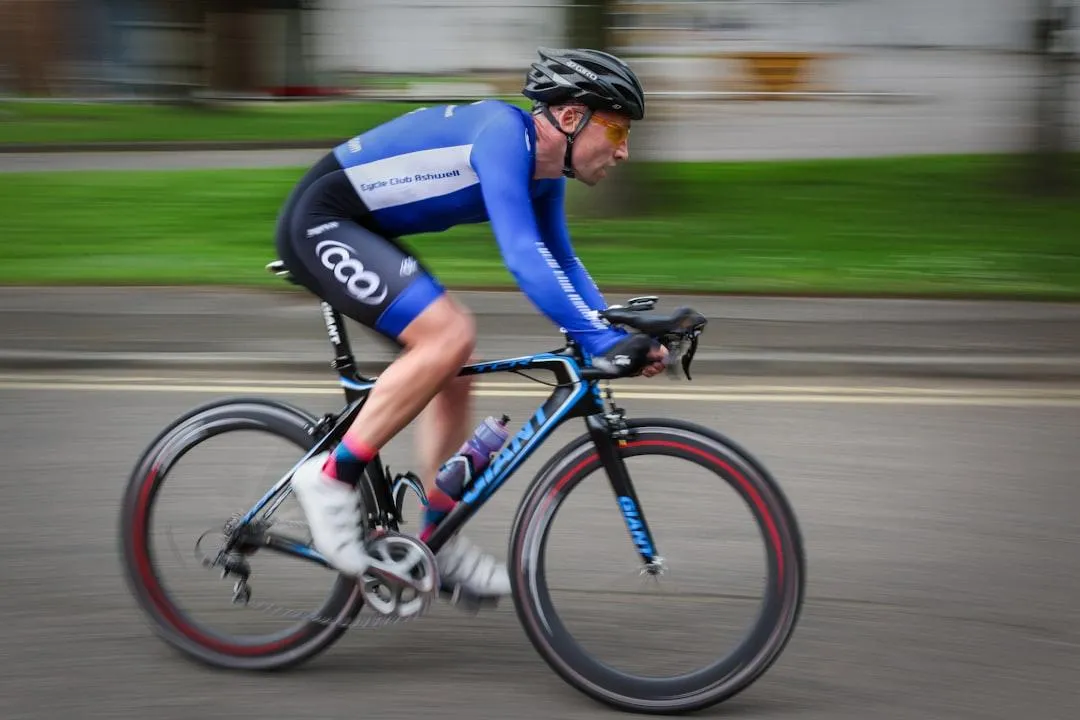
Mental Endurance: Why Your Brain Quits Before Your Body Does
Alex Bolowich is a Certified Mental Performance Consultant, founder of Elite Mental Performance and Co-Founder of Ibex Tactics. Alex is based out of Charlotte, North Carolina, where he specializes in working with athletes and teams to help them perform in the most intense situations, building practices for sustained excellence at elite levels like the NCAA, NFL, MLS, NBA, and Olympics. If you are interested in any of his signature programs, use the link here! Enjoy the article below!
Mental Endurance: Why Your Brain Quits Before Your Body Does
You're in the fourth quarter, on the last stretch of the race, or at the tail end of a grueling season. Your legs feel like concrete. Your lungs are burning. Mind is fatigued. And you have a battle to face that is going to separate winning or going home.
And somewhere, deep in the command center between your ears, a small but very persuasive voice starts this idea, "can I actually get it done? What if I don't? There goes everything I've worked for."
And you know you have to battle that. Most athetes turn to motivational speeches, or their untrained self-talk hoping it's enough to get them through... but what gets you
This is not motivational poster stuff. This is neuroscience. The phenomenon is real, it is documented, and it has a name: the central governor theory. Your brain, not your muscles, is the gatekeeper of your physical limits. It pulls the plug before your body actually hits empty, because the brain is in the business of survival, not podium finishes.
The problem? Elite athletes cannot afford to let a survival mechanism make competitive decisions. If your mental endurance is undertrained, your brain will bench you before your body ever gets the chance to show what it is capable of. And in a sport culture as competitive as what you find in NCAA programs across North Carolina, or in high school athletics pipelines feeding D1 programs, losing that mental edge is the difference between a scholarship offer and sitting in the stands.
The Brain Quits First: Here Is the Research
Physiologist Tim Noakes first proposed the central governor model, arguing that the brain acts as a pacing regulator, throttling physical output based on anticipated threat rather than actual physiological failure (Noakes, 2012). In other words, your brain starts shutting things down long before your body reaches its actual ceiling.
More recently, sport and performance psychology research has built on this with the concept of mental fatigue, which is distinct from physical fatigue but directly impairs physical performance. A landmark study published in the Journal of Applied Physiology found that mentally fatigued subjects showed significantly reduced endurance capacity, even when their physical baseline was unchanged (Marcora, Staiano, and Manning, 2009). They did not fail because their muscles gave out. They failed because their brains decided the cost was too high.
The mechanism behind this is perceived effort. When mental fatigue is present, the same physical task feels harder. Harder-feeling effort leads to earlier pacing decisions. Earlier pacing decisions lead to underperformance. The chain of events does not start in your quads. It starts in your prefrontal cortex.
What if the biggest performance variable in your sport is not your conditioning, your mechanics, or your strength training? What if it is the trained capacity of your mind to sustain belief, focus, and effort when everything in you is screaming to stop?
Mental Endurance Is a Skill, Not a Personality Trait
At Elite Mental Performance, Mental Endurance is defined as how long you can sustain effort, focus, belief, and joy through the rigorous demands of elite athletics. Let that sink in. Not just effort. Not just grinding. Joy. Because if you cannot sustain enjoyment through the hard parts, you are burning your competitive career on a short fuse.
This is one of the 4 Core Mental Skills in the EMP framework, alongside Mental Strength, Mental Agility, and Mental Flexibility. Each skill is trainable. Each one can be assessed, developed, and measured over time. Mental Endurance is not the personality trait of someone who is "just tough." It is a trained capacity built through deliberate reps, just like a back squat or a sprint interval.
Here is a reality check for athletes who have bought into the hustle mythology: grinding harder does not train mental endurance. Grinding without awareness trains you to white-knuckle through discomfort and call it toughness. That is not endurance. That is brute force with a shelf life. True mental endurance is the ability to sustain high-quality performance for longer, not to suffer more impressively.
The research backs this. A 2014 study in the Journal of Sport and Exercise Psychology found that psychological skills training, including self-talk, imagery, and goal-setting, significantly improved endurance performance and reduced perceived effort during high-intensity exercise (Blanchfield et al., 2014). The athletes did not get fitter between trials. They got better at managing their minds.
3 Ways to Build Mental Endurance That Actually Work
Most athletes approach mental endurance like they approach motivation: hope it shows up on the right day. That's not a strategy. That's wishful thinking dressed up in athletic gear.
Mental endurance is not one thing you turn on before a big game. It's a practice that wraps around the entire competitive experience: before you step into it, while you're inside it, and after you walk out the other side. Here are three strategies that actually develop it.
Strategy 1: Pre-Competition. Connect to a Purpose That's Bigger Than the Result
The Problem With Shallow 'Why'
Ask most athletes why they compete, and you'll get some version of: I want to win, I want a scholarship, I want people to see what I'm capable of. Those are answers. They're just not the right ones.
There's a difference between purpose you can explain in a sentence and purpose that actually pulls you through the hardest moments of competition. Most athletes are operating off the surface version. And when the competition gets ugly, when they're down by three in the fourth quarter, when they've missed the last five shots, when the race feels like it might never end, that surface-level purpose evaporates. It was never deep enough to matter.
Research in Self-Determination Theory (Ryan & Deci, 2017) has consistently shown that athletes driven by autonomous, intrinsic motivation demonstrate significantly greater psychological resilience under stress compared to those motivated by external validation or outcomes. When your "why" is rooted in genuine values and personal meaning, it acts as a buffer against the psychological demands of high-load competition. When it's rooted in seeking approval, proving yourself, or chasing stats, it collapses the moment the environment gets hard.
A more recent review published in the Journal of Science and Medicine in Sport found that elite athletes who reported a clear sense of meaning and purpose in their sport showed better emotional regulation during adverse competitive conditions. Not because they were more talented. Because they had something deeper anchoring them.
This Takes Real Work. Probably More Than You Think.
Here's the part nobody wants to hear: finding your actual purpose, not the Instagram caption version of it, can take weeks. Sometimes months. That's not an exaggeration.
A lot of what drives athletes comes from subconscious motivators: fear of failure, need for acceptance, childhood experiences, a coach who once told you you'd never make it. These aren't motivations you can identify in a 10-minute journaling exercise. They live below the surface. And if you're competing with a purpose grounded in insecurity or lack, it will feel like purpose right up until the moment it fails you.
David Goggins talks about this in his own framework: you don't find the real version of yourself in comfort. You find it in interrogating why you actually do what you do. Not what sounds good. What's actually true.
Spend time with this. Reflect on your values, not your goals. Think about who you're becoming through your sport, not what you're accumulating from it. A purpose that is future-oriented, process-grounded, and connected to something beyond your personal performance record is what will keep you going when everything in you wants to stop.
Practical Application: Before your next competition, take 10 minutes, not to visualize winning, but to answer this question honestly: Who am I becoming by competing at my best today? Write it down. Make it specific. Make it true.
Strategy 2: Mid-Competition. Use the Chunking Strategy to Manage the Perception of Distance
Your Brain Quits When It Calculates the Finish Line
Mental endurance doesn't break down in a vacuum. It breaks down the moment your brain starts calculating how much is left. You're six miles into a ten-mile race and instead of running the mile you're on, you're mentally running all four remaining miles at once. You're in the second half of a 90-minute match and your mind is already exhausted by the time that's still in front of you.
Research on attentional focus in endurance sports has established that where an athlete directs their attention during competition has a direct impact on performance and perceived exertion (Masters & Ogles, 1998). The key variable is not how hard the task is. It's how much of the task the athlete is mentally carrying at one time.
A strategy that addresses this directly is called chunking. Instead of mentally holding the full distance of the task ahead, the athlete breaks the competition into discrete segments and focuses only on executing the current one.
What Chunking Actually Looks Like
It's not complicated, but it requires intentional practice. You're not getting to the finish line. You're getting to the next mile marker. The next possession. The next set. The next lap. That's the only task that exists right now.
Research published in the British Journal of Sports Psychology (Brick, MacIntyre & Campbell, 2014) identified that elite endurance runners who used structured attentional strategies, including segment-focused thinking, performed better and reported lower psychological fatigue than those who maintained an unstructured or outcome-focused mental approach. The chunking strategy is, at its core, a process-goal intervention applied in real time.
From a neuroscience standpoint, this also makes sense. When the brain perceives an overwhelming task, it triggers what psychologists call ego depletion, a reduction in the willingness to continue exerting effort. Breaking the task into smaller units reduces the perceived scale of the demand, maintaining access to more psychological resources for longer.
How to Build It
Before competition: pre-identify your chunks. If you're running a 5K, your chunks might be each kilometer. If you're playing a basketball game, your chunks might be each two-minute stint. If you're in a long wrestling match or tennis set, it might be each individual exchange.
During competition: when your mind drifts toward the finish, pull it back. Hard. The only question worth answering is: what does the best possible execution of this segment look like? Not the next three. This one.
The discipline to stay in the current chunk is the mental endurance skill itself. You're not enduring the whole competition. You're enduring one segment at a time, over and over again.
Strategy 3: Post-Competition. Downregulate Your Nervous System to Build Mental Recovery
Your Mind Is a Muscle. You Need to Stretch It After the Game.
You stretch after a hard training session. You ice your knee. You use a foam roller on your quads. You take your physical recovery seriously, even if only partially. But after competition, most athletes do essentially nothing for their mental recovery. They replay the performance on the way home. They argue with themselves about every mistake. They scroll their phone while their nervous system is still running at a full sprint. And then they wonder why they feel burned out or flat heading into the next week.
After competition, your sympathetic nervous system, the branch responsible for the fight-or-flight response, is still highly activated. Cortisol levels are elevated. Emotional arousal is high. Cognitive rumination is running. Research on the parasympathetic reactivation of athletes after intense exercise shows that the nervous system does not automatically "come down" simply because the event is over (Perrotta et al., 2023). Recovery has to be intentional.
Two Practices You Should Be Using
Progressive Muscle Relaxation (PMR). PMR is one of the most well-researched relaxation techniques in sports psychology. A 2022 study published in Frontiers in Physiology (Battaglini et al., 2022) found that basketball athletes who completed a PMR program showed significantly reduced state anxiety, lower heart rate, and higher perceived recovery compared to controls. The mechanism is direct: systematically tensing and releasing muscle groups triggers parasympathetic nervous system dominance, reducing the physiological markers of competitive stress. Spend 10 to 15 minutes on this after competition. Not optional. Not when you feel like it. Every time.
Gratitude or Mindful Reflection. The cognitive side of post-competition recovery matters just as much as the physiological. This doesn't mean writing in a gratitude journal about sunshine and rainbows. It means deliberately shifting your mental attention from outcome evaluation to process reflection. What did you execute well? What did you learn? What is one thing you're grateful for about today's experience? Research on mindful reflection in athletes shows it reduces ruminative thought patterns following competition, which directly impacts emotional regulation and readiness for the next performance.
And Sleep. Non-Negotiable.
If you're skipping 7 to 9 hours of sleep in the name of grinding, you are not grinding. You are dismantling yourself.
A comprehensive review published in Current Sports Medicine Reports (Grandner & Seixas, 2023) found that sleep deprivation impairs reaction time, decision-making, emotional regulation, and motor performance across essentially every sport measured. The NCAA has now formally incorporated sleep health into its athlete welfare guidelines precisely because the evidence is that strong. Mental endurance is built during recovery. Not in spite of it.
Your brain repairs itself during sleep. Emotional regulation resets during sleep. Cognitive resources are restored during sleep. There is no mental skills training program in the world that outperforms consistent, quality sleep. Get serious about it.
References
Ryan, R. M., & Deci, E. L. (2017). Self-determination theory: Basic psychological needs in motivation, development, and wellness. Guilford Press.
Lundqvist, C., & Raglin, J. S. (2015). The relationship of basic need satisfaction, motivational climate and personality to well-being and stress patterns among elite athletes: An explorative study. Motivation and Emotion, 39, 237-246. https://doi.org/10.1007/s11031-014-9444-z
Stambulova, N., & Ryba, T. V. (2024). Searching for meaning and purpose in elite sport: A narrative review of sport psychology literature with theoretical insights from psychology. Journal of Science and Medicine in Sport. https://doi.org/10.1016/j.jsams.2024.08.003
Brick, N., MacIntyre, T., & Campbell, M. (2014). Attentional focus in endurance activity: New paradigms and future directions. International Review of Sport and Exercise Psychology, 7(1), 106-134. https://doi.org/10.1080/1750984X.2014.885554
Stanley, C. T., Pargman, D., & Tenenbaum, G. (2007). The effect of attentional coping strategies on perceived exertion in a cycling task. Journal of Applied Sport Psychology, 19(3), 352-363. https://doi.org/10.1080/10413200701313029
McCormick, A., Meijen, C., & Marcora, S. (2015). Psychological determinants of whole-body endurance performance. Sports Medicine, 45, 997-1015. https://doi.org/10.1007/s40279-015-0319-6
Battaglini, C. L., Hackney, A. C., Garcia, R., Groff, D., Evans, E., & Shea, T. (2022). Analysis of progressive muscle relaxation on psychophysiological variables in basketball athletes. International Journal of Environmental Research and Public Health, 19(24), 16610. https://doi.org/10.3390/ijerph192416610
Perrotta, A. S., White, M. D., & Bhambhani, Y. N. (2023). The effects of relaxation techniques following acute, high intensity football training on parasympathetic reactivation. Frontiers in Sports and Active Living, 5, 1267631. https://doi.org/10.3389/fspor.2023.1267631
Grandner, M. A., & Seixas, A. (2023). Sleep and athletic performance: Impacts on physical performance, mental performance, injury risk and recovery, and mental health. Current Sports Medicine Reports, 22(3), 79-85. https://doi.org/10.1249/JSR.0000000000001045
